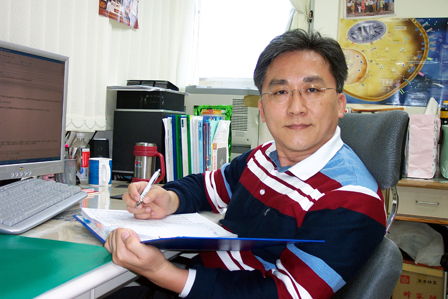
沈郁強(Shen, Yuh-Chiang)
E-mail:yuhcs@nricm.edu.tw
Major Professional Experiences
2. Associate Research Fellow, National Research Institute of Chinese Medicine
3. Assistant Research Fellow, National Research Institute of Chinese Medicine
4. Adjunct Professor, National Taipei University of Nursing and Health Science
5. Post Doctoral Fellow, Basic and Clinic Research, National Research Institute of Chinese Medicine
6. Post Doctoral Fellow, Division of Cancer Research, National Health Research Institute
7. Clinic Pharmacist, Department of Pharmacy, National Taiwan University Hospital
Innovative Traditional Chinese Medicine (iTCM)-driven translational research and multi-target therapeutic strategies, with a focus on redefining complex diseases as dynamic network states and attractor transition problems. Research interests include neuroprotection in stroke and neurodegenerative disorders, inflammation and immune regulation (TLR, JAK/STAT, PI3K/AKT, NETosis), leukocyte biology, and molecular and cellular mechanisms. Integrates multi-omics, animal models, and real-world data (RWD) to develop cross-scale translational platforms and systems medicine frameworks.
Modern medicine has been profoundly shaped by a reductionist paradigm in which disease is viewed as the consequence of discrete molecular abnormalities and treated through single-target interventions. While this framework has yielded transformative therapies for acute and well-defined conditions, it falls short in explaining and effectively treating complex diseases such as COVID-19, chronic inflammatory disorders, and neurodegeneration. Increasing evidence suggests that these conditions do not arise from isolated defects, but from system-wide reorganizations across interconnected biological networks. Here, we propose a unifying systems-level framework in which disease is conceptualized as a dynamic network state, stabilized within pathological attractor landscapes spanning immune, neural, and metabolic systems. Within this perspective, disease progression reflects transitions between stable states, rather than linear cascades of molecular events, and therapeutic efficacy emerges not from single-node inhibition but from modulating the topology of the network to drive state transitions toward health. This paradigm provides a mechanistic basis for multi-component therapeutics, including traditional Chinese medicine, whose distributed, low-dose interventions can induce system-level reconfiguration and restore physiological attractors. By reframing disease and therapy through the lens of attractor dynamics, we offer a conceptual bridge between reductionist biology and holistic medicine, opening new avenues for understanding, predicting, and controlling complex human diseases.
Dr. Yuh-Chiang Shen is dedicated to advancing Innovative Traditional Chinese Medicine (iTCM) and modernizing herbal therapeutics through a systems-based translational framework. He established the “Evidence Chain” in conjunction with the CMCTC (Clinical-driven Modernization of Chinese Traditional Medicine) model, creating a closed-loop pipeline that connects bedside observations, mechanistic validation, and real-world implementation.
His work moves beyond the conventional “single-cause, single-target” paradigm by proposing a systems medicine perspective in which disease is defined as a dynamic state. Within this framework, complex diseases are understood as stable configurations—attractor states—within multi-layered biological networks (neural, immune, and metabolic). Disease arises when the system shifts into a pathological attractor, while therapy is conceptualized not as elimination, but as guiding the system across critical transitions back to a healthy attractor.
During the COVID-19 pandemic, Dr. Shen led the development and mechanistic elucidation of NRICM101 and NRICM102. Through integrated multi-omics, RNA sequencing, and animal models, his work demonstrated that these multi-component herbal formulations exert therapeutic effects not through single targets, but via multi-component synergy and network reconfiguration, modulating key inflammatory and immune pathways (TLR, JAK/STAT, PI3K/AKT, NETosis). This systems-level modulation effectively redirects disease trajectories, significantly reducing disease severity and mortality.
At the mechanistic level, his research further characterizes complex diseases—including COVID-19, COPD, and neurodegenerative disorders—as critical state transition phenomena across interconnected biological networks. His approach emphasizes multi-target intervention, network regulation, and attractor modulation, integrating AI and network pharmacology to reveal how herbal formulas produce emergent therapeutic effects even at low concentrations through system-wide reorganization.
Dr. Shen’s team has established an integrated translational ecosystem encompassing herbal design, quality control (CMC/HPLC), mechanistic studies, animal models, and clinical and real-world data (RWD). By applying methods such as propensity score matching, his work elevates RWD to near-RCT-level evidence, while introducing system-state transition as a novel clinical efficacy metric beyond single biomarkers.
His research further demonstrates that diverse diseases share common underlying inflammatory and neuro-network dysregulation, corresponding to similar pathological attractor structures, thereby enabling cross-disease, scalable translational models.
Dr. Shen has been named among Stanford University’s top 2% of scientists worldwide for five consecutive years (2020–2025). His work not only strengthens the scientific foundation of TCM, but also pioneers a new medical paradigm centered on attractor dynamics, integrating Eastern holistic philosophy with modern systems science to establish a globally competitive model of translational medicine with clinical, industrial, and societal impact.
Publication (selected)
- Wei WC, Tsai KC, Liaw CC, Chiou CT, Tseng YH, Liao GY, Lin YC, Chiou WF, Liou KT, Yu IS, Shen YC(*), Su YC. NRICM101 ameliorates SARS-CoV-2-S1-induced pulmonary injury in K18-hACE2 mice model. Front Pharmacol. 2023 Jun 21;14:1125414. doi: 10.3389/fphar.2023.1125414. PMID: 37416063; PMCID: PMC10320700. (*), 共同責任作者 (臺灣清冠一號有效治療COVID19研究)
- Wei WC, Liaw CC, Tsai KC, Chiou CT, Tseng YH, Chiou WF, Lin YC, Tsai CI, Lin CS, Lin CS, Liou KT, Yu IS, Shen YC(*), Su YC. Targeting spike protein-induced TLR/NET axis by COVID-19 therapeutic NRICM102 ameliorates pulmonary embolism and fibrosis. Pharmacol Res. 2022 Oct;184:106424. doi: 10.1016/j.phrs.2022.106424. Epub 2022 Sep 5. PMID: 36064077; PMCID: PMC9443660. (*),共同責任作者 (臺灣清冠二號有效治療COVID19重症研究)
- Chang CC, Wang YH, Yen JC, Liaw CC, Tsai KC, Wei WC, Chiou WF, Chiou CT, Liou KT, Shen YC(*), Su YC. NRICM101 in combatting COVID-19 induced brain fog: Neuroprotective effects and neurovascular integrity preservation in hACE2 mice. J Tradit Complement Med. 2024 Jul 3;15(1):36-50. doi: 10.1016/j.jtcme.2024.07.001. PMID: 39807266; PMCID: PMC11725119. (*), 共同責任作者 (臺灣清冠一號有效治療COVID後腦霧研究)
- Shen et al (2024). NRICM102: A Breakthrough in Treating Pulmonary Inflammation, Fibrosis, and COPD – A Multi-Target Approach to Respiratory Health. (臺灣清冠二號有效治療COPD研究; IP application)
- Shen et al (2024). Intervention of NRICM102 and N-acetylcysteine in mitigating hepatorenal toxicity and enhancing cellular defense against bongkrekic acid poisoning. (臺灣清冠二號有效治療邦克烈酸誘發肝腎衰竭研究; IP application)
- Chern CM, Lu CK, Liou KT, Wang YH, Tsai KC, Chang CL, Chang CC, Shen YC(*). Medicarpin isolated from Radix Hedysari ameliorates brain injury in a murine model of cerebral ischemia. J Food Drug Anal. 2021 Dec 15;29(4):581-605. doi: 10.38212/2224-6614.3377. PMID: 35649147; PMCID: PMC9931010. (*), 責任作者 (臺灣醒腦一號有效治療缺血型中風之研究1)
- Wang HW, Liou KT, Lin HJ, Shen YC(*). Deciphering the neuroprotective mechanisms of Bu-yang Huan-wu decoction by an integrative neurofunctional and genomic approach in ischemic stroke mice. J Ethnopharmacol. 2011 Oct 31;138(1):22-33. doi: 10.1016/j.jep.2011.06.033. Epub 2011 Jul 8. PMID: 21784143. (*), 責任作者 (臺灣醒腦一號有效治療缺血型中風之研究2)
- Shen YC, Lu CK, Liou KT, Hou YC, Lin YL, Wang YH, Sun HJ, Liao KH, Wang HW. Common and unique mechanisms of Chinese herbal remedies on ischemic stroke mice revealed by transcriptome analyses. J Ethnopharmacol. 2015 Sep 15;173:370-82. doi: 10.1016/j.jep.2015.07.018. Epub 2015 Jul 31. PMID: 26239152. 第一作者 (中藥臨床驗方有效治療缺血型中風研究)
專利佈局
- 沙巴蛇草之萃取方法、其萃取物以及用於治療骨質疏鬆、神經退化性疾病、骨骼肌萎縮及促進傷口癒合之用途
- 治療或預防神經性疾病之藥物 (臺灣醒腦一號)
- 植物組成物、中草藥組成物在製備治療肺損傷藥物中之用途(臺灣清冠二號)
- 植物組成物、中草藥組成物及其用途 (臺灣清冠二號)
- USE OF PLANT COMPOSITION, TRADITIONAL CHINESE MEDICINE COMPOSITION IN PREPARING MEDICINE FOR TREATING COVID-19 (臺灣清冠二號)
- PLANT COMPOSITION, TRADITIONAL CHINESE MEDICINE COMPOSITION AND USE THEREOF (臺灣清冠二號)
- 牛膝萃取方法、牛膝萃取物、其用途及包含其之藥物組合
- A composition of Chinese medicine ingredients for treating neurodegenerative diseases (臺灣清腦一號)
- A composition of food ingredients for use as a preventive, therapeutic, or ameliorating agent for acute central nervous system injuries and resulting sequelae (臺灣醒腦一號)。
Published Papers
NCBI PubMed : Yuh-Chiang Shen (Please click!!)
- Liu SH, Huang HT, Lo IW, Lin YC, Liao GY, Chao CH, Huang HC, Chang FR, Li TL, Shen YC*, Liaw CC. Potential natural product 3,4-seco-schitriterpenoids from Kadsura japonica L. as anti-neuroinflammatory agents. Bioorg Chem. 2023 Sep 6;141:106843. doi: 10.1016/j.bioorg.2023.106843. Epub ahead of print. PMID:37696148.
- Lin SY, Chang CL, Liou KT, Kao YK, Wang YH, Chang CC, Kuo TBJ, Huang HT, Yang CCH, Liaw CC, Shen YC*. The protective role of Achyranthes aspera extract against cisplatin-induced nephrotoxicity by alleviating oxidative stress, inflammation, and PANoptosis. J Ethnopharmacol. 2023 Aug 28;319(Pt 1):117097. doi: 10.1016/j.jep.2023.117097. Epub ahead of print. PMID: 37648176.
- Chang SS, Huang HT, Wei WC, Lo IW, Lin YC, Chao CH, Liao GY, Shen YC, Chen JJ, Li TL, Lin LT, Tai CJ, Kuo YH, Liaw CC. Anti-inflammatory effect of euphane-and tirucallane-type triterpenes isolated from the traditional herb <i>Euphorbia neriifolia</i> L. Front Chem. 2023 Jun 23;11:1223335. doi: 10.3389/fchem.2023.1223335. PMID: 37426336; PMCID: PMC10326319.
- Wei WC, Tsai KC, Liaw CC, Chiou CT, Tseng YH, Liao GY, Lin YC, Chiou WF, Liou KT, Yu IS, Shen YC*, Su YC. NRICM101 ameliorates SARS-CoV-2-S1-induced pulmonary injury in K18-hACE2 mice model. Front Pharmacol. 2023 Jun 21;14:1125414. doi:10.3389/fphar.2023.1125414. PMID: 37416063; PMCID: PMC10320700.
- Huang HT, Lo IW, Liao GY, Lin YC, Shen YC, Huang HC, Li TL, Lee KT, Kuo YH, Liaw CC. Anti-inflammatory sesquiterpene and triterpene acids from <i>Mesona procumbens</i> Hemsley. Front Chem. 2022 Sep 15;10:1003356. doi: 10.3389/fchem.2022.1003356. PMID: 36186589; PMCID: PMC9520569.
- Wei WC, Liaw CC, Tsai KC, Chiou CT, Tseng YH, Chiou WF, Lin YC, Tsai CI, Lin CS, Lin CS, Liou KT, Yu IS, Shen YC*, Su YC. Targeting spike protein-induced TLR/NET axis by COVID-19 therapeutic NRICM102 ameliorates pulmonary embolism and fibrosis. Pharmacol Res. 2022 Oct;184:106424. doi: 10.1016/j.phrs.2022.106424. Epub 2022 Sep 5. PMID: 36064077; PMCID: PMC9443660.
- Tseng YH, Lin SJ, Hou SM, Wang CH, Cheng SP, Tseng KY, Lee MY, Lee SM, Huang YC, Lin CJ, Lin CK, Tsai TL, Lin CS, Cheng MH, Fong TS, Tsai CI, Lu YW, Lin JC, Huang YW, Hsu WC, Kuo HH, Wang LH, Liaw CC, Wei WC, Tsai KC, Shen YC, Chiou WF, Lin JG, Su YC. Curbing COVID-19 progression and mortality with traditional Chinese medicine among hospitalized patients with COVID-19: A propensity score-matched analysis. Pharmacol Res. 2022 Oct;184:106412. doi: 10.1016/j.phrs.2022.106412. Epub 2022 Aug 23. PMID: 36007774; PMCID: PMC9395232.
- Chern CM, Lu CK, Liou KT, Wang YH, Tsai KC, Chang CL, Chang CC, Shen YC*. Medicarpin isolated from Radix Hedysari ameliorates brain injury in a murine model of cerebral ischemia. J Food Drug Anal. 2021 Dec 15;29(4):581-605. doi: 10.38212/2224-6614.3377. PMID: 35649147; PMCID: PMC9931010.
- Chen LL, Lee MH, Chang CL, Liou KT, Liu SH, Chern CM, Chen HI, Shen YC*, Wang YH. Suppression of Inflammatory and Fibrotic Signals by Cinnamon (<i>Cinnamomum cassia</i>) and Cinnamaldehyde in Cyclophosphamide-Induced Overactive Bladder in Mice. Evid Based Complement Alternat Med. 2021 Dec 22;2021:5205759. doi:10.1155/2021/5205759. PMID: 34976095; PMCID: PMC8716214.
- Kung YY, Kuo TBJ, Lai CT, Shen YC, Su YC, Yang CCH. Disclosure of suboptimalhealth status through traditional Chinese medicine-based body constitution and pulse patterns. Complement Ther Med. 2021 Jan;56:102607. doi: 10.1016/j.ctim.2020.102607. Epub 2020 Nov 19. PMID: 33220452.
- Chen LL, Shen YC, Ke CC, Imtiyaz Z, Chen HI, Chang CH, Lee MH. Efficacy of cinnamon patch treatment for alleviating symptoms of overactive bladder: A,double-blind, randomized, placebo-controlled trial. Phytomedicine. 2021 Jan; 80:153380. doi: 10.1016/j.phymed.2020.153380. Epub 2020 Oct 12. PMID: 33091856.
- Chern CM, Zhou H, Wang YH, Chang CL, Chiou WF, Chang WT, Yao CH, Liou KT, Shen YC*. Osthole ameliorates cartilage degradation by downregulation of NF-κB and HIF-2α pathways in an osteoarthritis murine model. Eur J Pharmacol. 2020 Jan15;867:172799. doi: 10.1016/j.ejphar.2019.172799. Epub 2019 Nov 22. PMID:31765607.
- Wang YH , Chern CM , Liou KT , Kuo YH , Shen YC* . Ergostatrien-7,9(11),22-trien-3β-ol from Antrodia camphorata ameliorates ischemic stroke brain injury via downregulation of p65NF-κ-B and caspase 3, and activation of Akt/GSK3/catenin-associated neurogenesis. Food Funct. 2019 Aug1;10(8):4725-4738. doi: 10.1039/c9fo00908f. Epub 2019 Jul 15. PMID: 31304955.
- Hsu WH, Shen YC, Shiao YJ, Kuo CH, Lu CK, Lin TY, Ku WC, Lin YL. Combined proteomic and metabolomic analyses of cerebrospinal fluid from mice with ischemic stroke reveals the effects of a Buyang Huanwu decoction in neurodegenerative disease. PLoS One. 2019 Jan 15;14(1):e0209184. doi: 10.1371/journal.pone.0209184. PMID: 30645580; PMCID: PMC6333407.
- Wang YH, Liou KT, Tsai KC, Liu HK, Yang LM, Chern CM, Shen YC*. GSK-3 inhibition through GLP-1R allosteric activation mediates the neurogenesis promoting effect of P7C3 after cerebral ischemic/reperfusional injury in mice. Toxicol Appl Pharmacol. 2018 Oct 15;357:88-105. doi: 10.1016/j.taap.2018.08.023. Epub 2018 Sep 4. PMID: 30189238.
- Shen YC, Juan CW, Lin CS, Chen CC, Chang CL. NEUROPROTECTIVE EFFECT OF <i>TERMINALIA CHEBULA</i> EXTRACTS AND ELLAGIC ACID IN PC12 CELLS. Afr J Tradit Complement Altern Med. 2017 Jun 5;14(4):22-30. doi: 10.21010/ajtcam.v14i4.3. PMID: 28638863; PMCID: PMC5471469.
- Huang YL, Shen CC, Shen YC, Chiou WF, Chen CC. Anti-inflammatory and Antiosteoporosis Flavonoids from the Rhizomes of Helminthostachys zeylanica. J Nat Prod. 2017 Feb 24;80(2):246-253. doi: 10.1021/acs.jnatprod.5b01164. Epub 2017 Feb 7. PMID: 28169537.
- Chien MY, Chuang CH, Chern CM, Liou KT, Liu DZ, Hou YC, Shen YC*. Salvianolic acid A alleviates ischemic brain injury through the inhibition of inflammation and apoptosis and the promotion of neurogenesis in mice. Free Radic Biol Med. 2016 Oct;99:508-519. doi: 10.1016/j.freeradbiomed.2016.09.006. Epub 2016 Sep 5. PMID: 27609227.
- Chen HJ, Shen YC*, Shiao YJ, Liou KT, Hsu WH, Hsieh PH, Lee CY, Chen YR, Lin YL. Multiplex Brain Proteomic Analysis Revealed the Molecular Therapeutic Effects of Buyang Huanwu Decoction on Cerebral Ischemic Stroke Mice. PLoS One. 2015 Oct 22;10(10):e0140823. doi: 10.1371/journal.pone.0140823. PMID: 26492191; PMCID: PMC4619651.
- Shen YC, Lu CK, Liou KT, Hou YC, Lin YL, Wang YH, Sun HJ, Liao KH, Wang HW. Common and unique mechanisms of Chinese herbal remedies on ischemic stroke mice revealed by transcriptome analyses. J Ethnopharmacol. 2015 Sep 15;173:370-82. doi: 10.1016/j.jep.2015.07.018. Epub 2015 Jul 31. PMID: 26239152.
- Wong YK, Chou MK, Shen YC, Wang YH, Yen JC, Chen CF, Lin SK, Liao JF. Preventive effect of baicalein on methamphetamine-induced amnesia in the passive avoidance test in mice. Pharmacology. 2014;93(5-6):278-85. doi: 10.1159/000365008. Epub 2014 Aug 21. PMID: 25170749.
- Hou YC, Lu CK, Wang YH, Chern CM, Liou KT, Wang HW, Shen YC*. Unique mechanisms of sheng yu decoction ( shèng yù tang) on ischemic stroke mice revealed by an integrated neurofunctional and transcriptome analysis. J Tradit Complement Med. 2013 Oct;3(4):240-9. doi: 10.4103/2225-4110.119703. PMID: 24716184; PMCID: PMC3925003.
- Chern CM, Wang YH, Liou KT, Hou YC, Chen CC, Shen YC*. 2-Methoxystypandrone ameliorates brain function through preserving BBB integrity and promoting neurogenesis in mice with acute ischemic stroke. Biochem Pharmacol. 2014 Feb 1;87(3):502-14. doi: 10.1016/j.bcp.2013.11.018. Epub 2013 Dec 14. PMID: 24342702.
- Shen YC, Yen JC, Liou KT. Ameliorative effects of caffeic acid phenethyl ester on an eccentric exercise-induced skeletal muscle injury by down-regulating NF-κb mediated inflammation. Pharmacology. 2013;91(3-4):219-28. doi: 10.1159/000348412. Epub 2013 Apr 3. PMID: 23571777.
- Pan MY, Shen YC, Lu CH, Yang SY, Ho TF, Peng YT, Chang CC. Prodigiosin activates endoplasmic reticulum stress cell death pathway in human breast carcinoma cell lines. Toxicol Appl Pharmacol. 2012 Dec 15;265(3):325-34. doi: 10.1016/j.taap.2012.08.034. Epub 2012 Sep 12. PMID: 22982536.
- Liao YR, Kuo PC, Liang JW, Shen YC, Wu TS. An efficient total synthesis of a potent anti-inflammatory agent, benzocamphorin F, and its anti-inflammatory activity. Int J Mol Sci. 2012;13(8):10432-10440. doi: 10.3390/ijms130810432. Epub 2012 Aug 21. PMID: 22949872; PMCID: PMC3431870.
- Lai JK, Wu HC, Shen YC, Hsieh HY, Yang SY, Chang CC. Krüppel-like factor 4 is involved in cell scattering induced by hepatocyte growth factor. J Cell Sci. 2012 Oct 15;125(Pt 20):4853-64. doi: 10.1242/jcs.108910. Epub 2012 Aug 1. PMID: 22854048.
- Chern CM, Liao JF, Wang YH, Shen YC*. Melatonin ameliorates neural function by promoting endogenous neurogenesis through the MT2 melatonin receptor in ischemic-stroke mice. Free Radic Biol Med. 2012 May 1;52(9):1634-47. doi: 10.1016/j.freeradbiomed.2012.01.030. Epub 2012 Feb 10. PMID: 22330064.
- Vijaya Bhaskar Reddy M, Shen YC, Ohkoshi E, Bastow KF, Qian K, Lee KH, Wu TS. Bis-chalcone analogues as potent NO production inhibitors and as cytotoxic agents. Eur J Med Chem. 2012 Jan;47(1):97-103. doi: 10.1016/j.ejmech.2011.10.026. Epub 2011 Oct 20. PMID: 22115618.
- Hsu JW, Wang SJ, Lin CL, Hsieh WC, Lirng JF, Shen YC, Liao MH, Chou YH. Short term vs. long term test-retest reproducibility of ¹²³I-ADAM for the binding of serotonin transporters in the human brain. Psychiatry Res. 2011 Dec 30;194(3):224-229. doi: 10.1016/j.pscychresns.2011.04.011. Epub 2011 Nov 10.PMID: 22079655.
- Chang CC, Wang YH, Chern CM, Liou KT, Hou YC, Peng YT, Shen YC*. Prodigiosin inhibits gp91(phox) and iNOS expression to protect mice against the oxidative/nitrosative brain injury induced by hypoxia-ischemia. Toxicol Appl Pharmacol. 2011 Nov 15;257(1):137-47. doi: 10.1016/j.taap.2011.08.027. Epub 2011Sep 7. PMID: 21925195.
- Wang HW, Liou KT, Wang YH, Lu CK, Lin YL, Lee IJ, Huang ST, Tsai YH, Cheng YC, Lin HJ, Shen YC*. Deciphering the neuroprotective mechanisms of Bu-yang Huan-wu decoction by an integrative neurofunctional and genomic approach in ischemic stroke mice. J Ethnopharmacol. 2011 Oct 31;138(1):22-33. doi: 10.1016/j.jep.2011.06.033. Epub 2011 Jul 8. PMID: 21784143.